Handheld Steam Cleaners for Kitchen Corners and Tile Details
Choose around suitable surfaces, grip comfort, refill interruptions, and the wiping work that follows the steam.
The household routine this purchase needs to fit
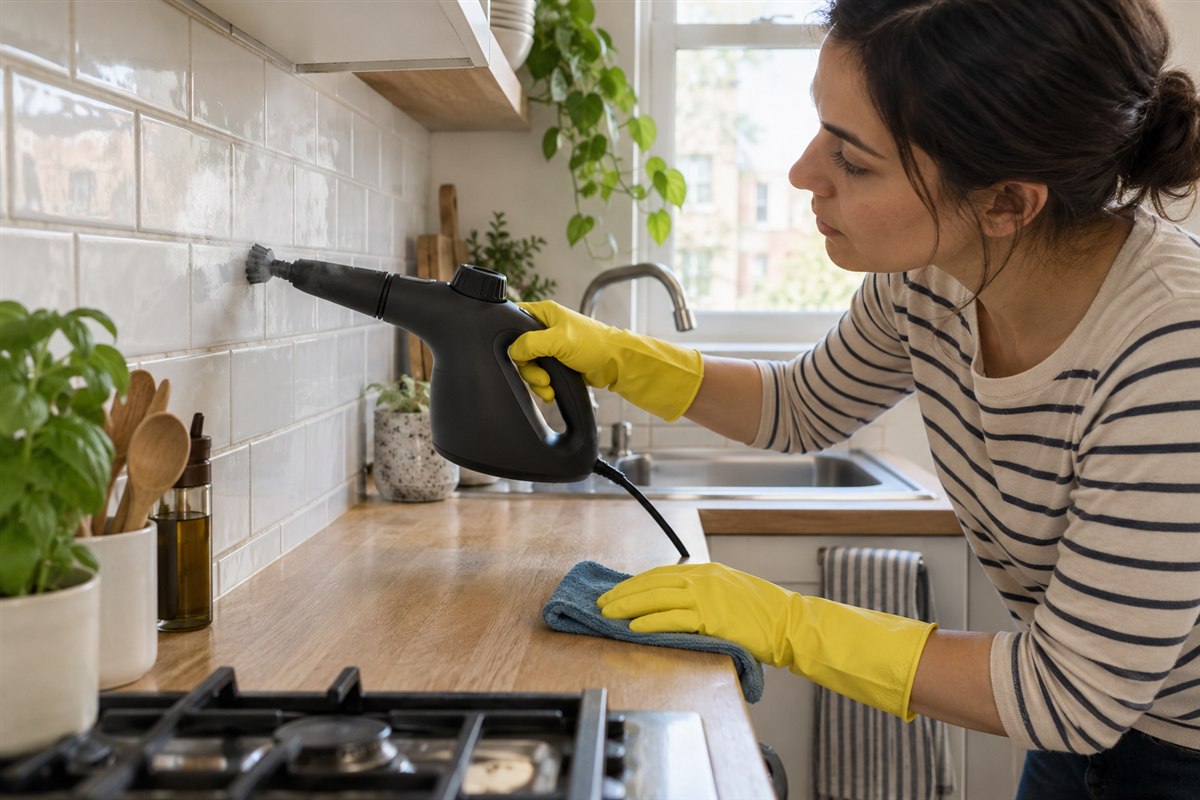
The kitchen is mostly clean, but the tiled backsplash behind the cooking area still has greasy grout lines and awkward corners. A handheld steamer seems easier than another long scrubbing session. Before adding one to your cupboard, identify the exact surfaces you want to clean. The surrounding paint, sealant, cabinet finish, and electrical fittings matter just as much as the tile itself.
What to compare before choosing
Surface suitability before attachments
Read both the steamer instructions and the surface-care guidance. A nozzle fitting into a gap does not establish that heat and moisture are appropriate there. Start with an inconspicuous test where permitted, and keep steam away from electrical components and unsuitable finishes.
Weight at the cleaning angle
A small body can still become tiring when you hold it at shoulder height. Compare filled weight, trigger operation, hose options, and nozzle reach. For several separate areas, a hose may keep the heavier body in a more comfortable position, but it adds another part to store.
Refilling and wiping
Check whether the exact design requires cooling or depressurizing before refilling. Frequent pauses may matter more than a headline steam-pressure figure. Keep suitable cloths ready to collect loosened residue; steam alone does not carry the dirt into a collection tank.
Choose a shortlist for your home
Use these scenarios to narrow the current listings, then compare the exact model instructions and the complete checkout cost. Retailer searches below are ordinary research links; no affiliate tracking ID is currently attached.
Compare current listingsBrowse handheld steam cleaner optionsWhere to spend, and when to skip the upgrade
A handheld model is worth shortlisting when several approved hard surfaces need detail cleaning regularly. If you only have one small patch, a surface-approved cleaner and brush may be simpler. Pay extra for a hose or useful brush shape rather than a large bundle of attachments you cannot identify a job for. Check replacement brush availability before choosing.
Your checkout checklist
- ✓Write down each surface and verify its heat-and-moisture care rules.
- ✓Measure reach from a suitable outlet without stretching the cord.
- ✓Read the refill, cooldown, and descaling instructions.
- ✓Check brush materials against the finish being cleaned.
- ✓Budget for replacement cloths and brushes used in normal maintenance.
Questions that change the buying decision
Will it vacuum up the dirty water?
A conventional handheld steamer does not extract the loosened dirt. Plan to wipe it away and allow the cleaned area to dry. Check separately if a machine advertises extraction.
Should I choose the highest steam pressure?
Prioritize suitability, handling, and refill workflow. A powerful setting is not useful on a surface that cannot tolerate the treatment.
Sources and editorial approach
This guide combines a realistic household scenario with editorial buying criteria and the reference material linked below. It does not report hands-on product testing. Manufacturer references illustrate features and care requirements; they are not a blanket endorsement of every model. Checked October 30, 2026.