Food Dehydrators for Garden Harvests and Lunchbox Snacks
Plan tray area, slice preparation, temperature controls, and storage before turning a seasonal harvest into a new appliance routine.
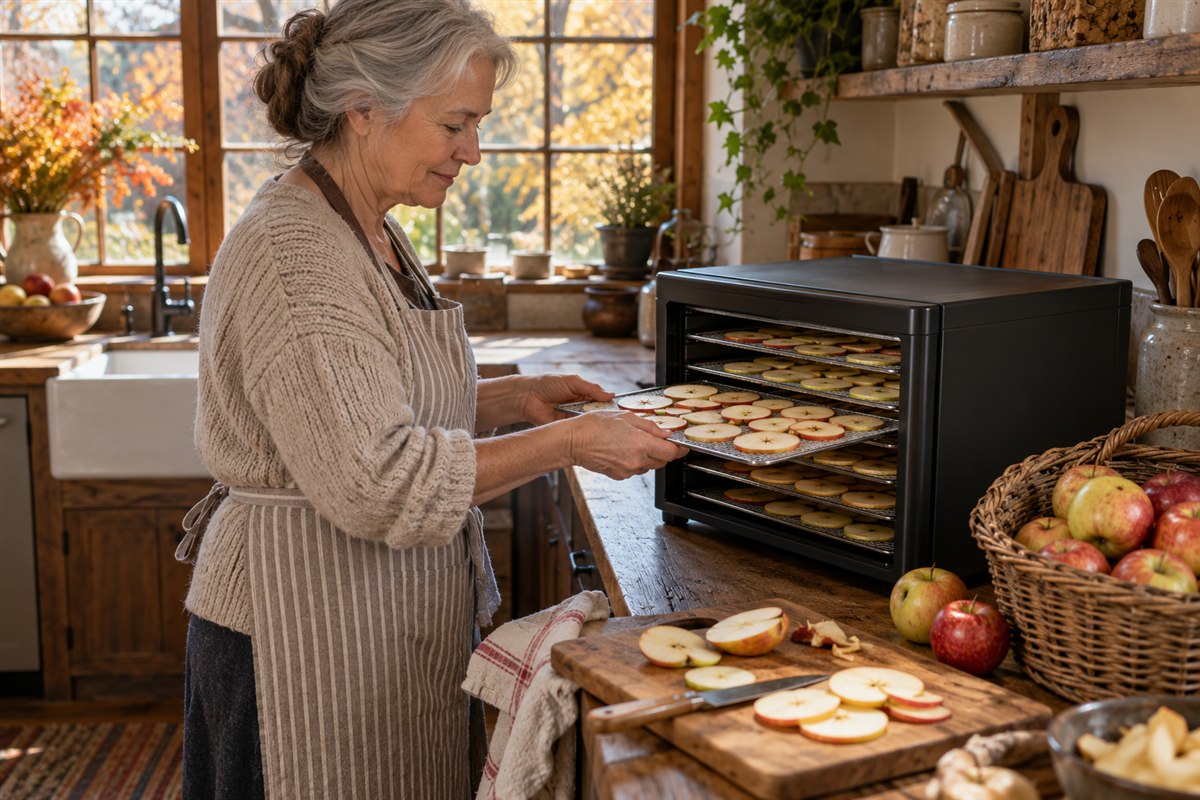
The household routine this purchase needs to fit
A neighbor shares a basket of apples just as your own fruit bowl fills up. Dried snacks sound appealing, but washing, slicing, arranging, checking, and packing the fruit still take effort. A dehydrator makes more sense when you enjoy that preparation and expect repeated batches. For a single small surplus, sharing the fruit or using an existing appliance may be the easier choice.
What to compare before choosing
Usable tray area
Look beyond the advertised number of trays. Check tray dimensions, the central opening on stackable designs, and whether slices need rotation during drying. Cabinet trays may offer straightforward access to one level, while a stackable machine can be easier to adapt to a small batch.
Controls for the foods you plan
Read the temperature range and food-specific guidance before buying. Herbs, fruit, and other foods do not all share one preparation method. A timer reduces the need to remember an end point, but it cannot guarantee that every slice is sufficiently dry. Slice thickness and room conditions affect the process.
Tray cleaning and food storage
Fine mesh or fruit-roll sheets may be separate purchases. Confirm compatibility rather than assuming accessories fit every model. Check whether trays can go in your dishwasher and where they will dry afterward. Add suitable storage containers to the budget if you do not already have them.
Choose a shortlist for your home
Use these scenarios to narrow the current listings, then compare the exact model instructions and the complete checkout cost. Retailer searches below are ordinary research links; no affiliate tracking ID is currently attached.
Compare current listingsBrowse food dehydrator optionsWhere to spend, and when to skip the upgrade
Our practical starting point is an adjustable unit with enough tray area for one normal preparation session. A larger cabinet becomes attractive when loading and unloading stacked trays is a recurring frustration. Avoid paying for maximum capacity before you know how much produce you will actually slice. More trays also mean more cleaning and storage.
Your checkout checklist
- ✓List your first three intended foods and locate their preparation guidance.
- ✓Compare tray area and the cost of useful mesh or liner accessories.
- ✓Choose a ventilated operating location with the required clearances.
- ✓Check care instructions and whether trays fit the sink.
- ✓Plan how finished food will be checked, packed, labeled, and stored.
Questions that change the buying decision
Can I dry everything using one temperature?
Do not assume so. Use the manufacturer’s food-specific instructions and an authoritative preservation guide. This shopping guide does not replace a validated drying procedure.
Does more power mean faster snacks?
Power alone does not establish drying time. NESCO’s guidance notes that food type, slice thickness, loading, humidity, and the machine itself can change the time required.
Sources and editorial approach
This guide combines a realistic household scenario with editorial buying criteria and the reference material linked below. It does not report hands-on product testing. Manufacturer references illustrate features and care requirements; they are not a blanket endorsement of every model. Checked October 30, 2026.